








Direction and company blueprint

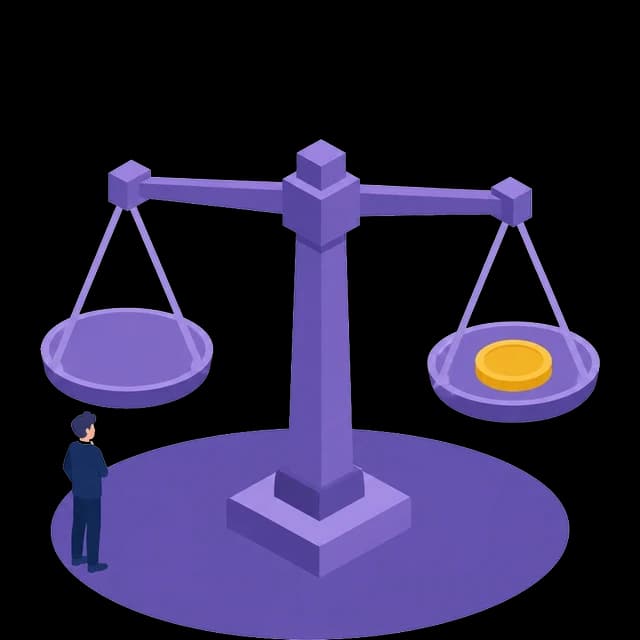
Surviving better, or changing the company’s fate?

A strategy programme for CEOs, built for deep thinking. Think through the key choices for the company’s next three to five years.

  • Where to compete
  • What to win with
  • How to build a lasting advantage
Book a Company Diagnosis (opens in a new tab)
  • In-person strategy workshop
  • dates and length per intake

What this programme is

Get the direction clear first. Then decide how.

We are used to taking answers home and following them. But good answers need the right questions.

This programme focuses on the strategy step: getting the direction right. The execution that follows is handled by vimigo for Team and vimigo Software.

  1. 01Choose the lane

    Where do we compete?

    See the opportunity; choose the market worth investing in.

  2. 02Take the position

    What role do we play?

    Set your position; find the value that is unique to your company.

  3. 03Build the advantage

    What keeps us winning?

    Build an advantage competitors find hard to catch up with.

Get the key questions clear, then make the next stage’s strategic choices.

The thinking map

From seeing the whole picture to making the key choices.

Ask the key questions, see the whole picture, and make the company’s next step clear.

  1. 01

    Ask the questions

    Where the thinking starts

    1. 1Running the company every day, but not doing strategy.
    2. 2Surviving better, or changing the company’s fate?
    3. 3What should this company actually be next?
  2. 02

    See the whole picture

    The strategic landscape

    Vision

    Mission

    The company and the person who runs it

    • Timingthe trend
    • Peoplecapability
    • Harmonyexecution
    • Groundmarket value
    • Advantagecompetitors

    Read all five sides, then make the strategic choice.

  3. 03

    Sharpen your judgement

The four strategic judgements you form

Book a Company Diagnosis (opens in a new tab)
Industry role
Who the company is for, what value it provides, and what role it plays in the industry.
Strategic position
A clear lane, link, entry point and position.
Asymmetric advantage
Your asymmetric point, and the strength you can borrow.
End-state and timing
What the end-state is, and when to reach it.

A map made for this page: the strategic landscape in the middle comes from the programme; the three heights and the four judgements follow its order.

The question the programme is built around

Management keeps you alive. Strategy changes your fate.

What management solves

Surviving better

Cut costRaise efficiencyAutomationERPKPIPerformance managementAI agentsFewer headcountHigher conversion

All of it matters. But the business model has not changed.

30M
33M
38M

Growth, but no new growth point.

What strategy solves

Changing the company’s fate

What should this company actually be next?

  • Product companyPlatform
  • ManufacturerSolution provider
  • SoftwareOperating system
  • LocalRegional
  • Build it all yourselfEcosystem

Change lane · change position in the industry · change customers · change the business model · enter a new market · build a second curve

vimigo for CEO works on the right-hand side only. The left-hand side is vimigo for Team and the Software.

First height · Stand high

See yourself first, then see more possibilities.

Where am I? What else is possible?

Step 1 · See yourself

Use CPR to see your company clearly.

See yourself first, then talk about vision.

CCustomer

Who is the core customer?

Too vague

“SME, consumer, manufacturer” is not precise enough.

Precise enough

Precisely: who should the resources go to? Focus on the customers truly worth serving.

PProduct

What does the customer actually buy?

Too vague

From SKUs and features to the core value.

Precise enough

The core value the customer pays for: what do we actually solve for them?

RRole

What role do you play in the industry?

Too vague

Manufacturer · Distributor · Retailer · Technology provider

Precise enough

Solution provider · Platform · Operator · Operating system

CPR has to end as one sentence:

Who we are for, what value we provide, in what industry role we exist.

If the CEO needs five minutes to explain what the company does, it usually means it is not yet thought through.

Step 2 · Open the boundaries

What else can we serve, solve, and do well?

Open the map first, then narrow. Opening boundaries is not diversification.

1

Customer boundary

Besides today’s customers, who else has the problem we can solve?

2

Product boundary

Besides today’s products, which step of the customer’s job could we also own?

3

Capability boundary

What we can already do — which new market could it also serve?

Slides 123–126 and 134 of the deck: see yourself before you see possibilities.

Second height · Walk high

Choose the direction, find the position, start from a concrete entry.

From seeing what is possible to the real strategic choice.

01 · MacroChoose the lane

Which field do we enter?

Read the trend, pick the direction.

02 · MesoChoose the link

Which key links in the chain do we connect?

Read the industry chain; find where to cooperate and where the value sits.

03 · MicroChoose the entry

Which concrete need do we start from?

Fix the customer, the scene, the point of entry.

Finally: raise the position

Redefine the company’s role and value: for whom, and what unique value do we create?

Choose the right direction, find the precise position, start from a concrete entry point.

Slide 155 of the deck: each level narrows the choice until the entry is concrete.

Third height · Stand tall

Strategy is not more effort. It is better choosing.

From choosing the battlefield to building the moat, to greater enterprise value.

  1. A · See the battlefield

    The industry, the opportunity, the direction

    1. 01

      Choose the lane

      industry / chain

    2. 02

      Choose the position

      business / brand / market

  2. B · Make the choice

    Focus resources, find the asymmetric breakthrough

    1. 03

      Decide what not to do

      what we do + what we don’t

    2. 04

      Find the asymmetric point

      never head-on against the strong

  3. C · Build the advantage

    Turn unique value into lasting competitiveness

    1. 05

      Build the business model

      how unique value earns

    2. 06

      Build the moat

      harder and harder to copy

  4. D · Scale the result

    From advantage to scale, to greater value

    1. 07

      Grow share and margin

      lasting competitive advantage

    2. 08

      Build organisational capability

      team + system + culture

    3. 09

      Adjust by stage

      innovate → grow → expand → transform

    4. 10

      Raise enterprise value

      long-term, sustainable, scalable

Strategy is not deciding “how we do better”. It is deciding where to fight, where not to, what we win with, and why others find it harder and harder to catch up.

Borrow a boat to go to sea

You do not have to own every capability.

Building it yourself may take five years; the right partner, one. Ask: where we are slowest, has someone already done it for ten years?

OwnPartnerInvestAcquireJVBring in a shareholder
Slide 146 (the asymmetric strategy map) and slide 226 (借船出海) of the deck, compressed.

Back into the operating system

How strategy becomes the company’s daily running.

Strategy is not the end of the work. It hands into the goals, rewards and people that run the company every day.

Begin with the end: when must it be done by?
IPO · biggerbig · smalla hundred years · successionno loss · small profit
  1. 终点Direction
    This programmeMission · Vision
  2. 方向Destination
  3. 战略Strategy
    OGSM
  4. 目标Goal
    vimigo for Team · vimigo SoftwarevimiGoal: yearly → quarterly → monthly → daily · vimiTeam · vimiSales
  5. 预算Budget
    Reward budget · personal bonus · team
  6. 奖励Reward
    vimiReward · vimiBank · EWF · vimiChallenge · vimiGame · Roadmap
  7. 人才Talent
    Diamond · Leaderboard · vimiClass · Roadmap
  8. 选料People (DNA)
    Attract → Filter → Select: interview, race, challenge, reading club, study tour, buddy system
Learn 学Test 考Practice 练Compete 比
Slides 247–248 of the deck: the whole operating system, from the end-state down to how people are selected. The three top rungs are this programme’s; the rest is carried by vimigo for Team and the Software.

What it covers

Five modules.

Reading the current

Policy, GDP, technology, customers, traffic, experience. The industry cycle — not your customers’ forecast as the industry’s.

Knowing yourself

Who you are and why customers choose you. Open the map, then narrow: opening boundaries is not diversification.

Strategy is choice

A high-potential lane upgrades, is not yet locked, and is big enough. Mass market → niche → target customer. Your best role. A capability gap, not a revenue gap.

Asymmetry and leverage

Choose a battlefield where your strength matters and theirs stops mattering. Borrow the industry’s, customers’, suppliers’, talent’s, technology’s, capital’s, policy’s, channels’ and partners’ strength: you do not need to own it, only to use it.

Begin with the end

When it must be done by — bigger, succession, IPO. Then strategy hands into goals, rewards and talent: OGSM, yearly to daily goals, the reward and talent systems, carried by vimigo for Team and vimigo Software.

System connection

How this product connects to the rest of vimigo

Receives from

Founder ambition, business context and the decisions that matter most.

Connects to

vimigo for Team operationalises the blueprint; vimigo for AI Team builds selected workflows; CVO coordinates across departments and drives execution.

Feedback created

Software data and business-impact reviews show where the blueprint needs to be refined.

Customer story

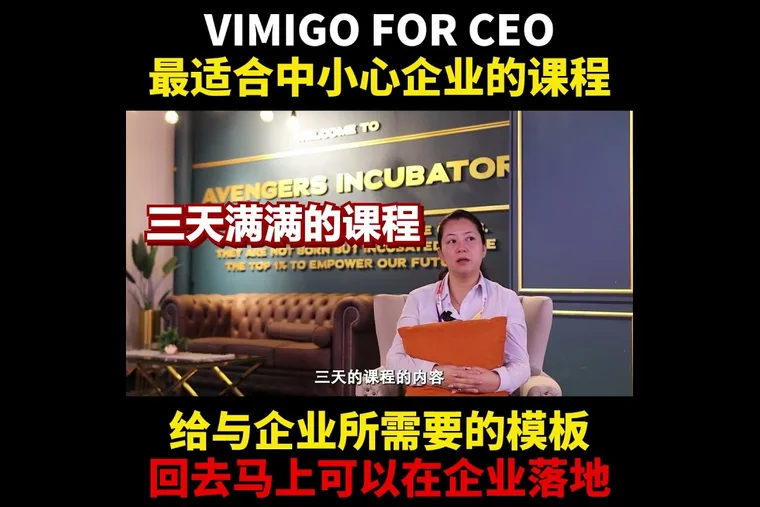
“The content of the three-day course actually runs from nine in the morning until eleven at night, and the content is really, really packed. And three days is honestly not enough time to learn this much, and I really feel it is well worth it.”

Charmaine Low · Founder / Person in Charge · Cutiecle Nail Experts · Services

Before you decide

What you bring, what is not included, how progress is measured.

What you bring

  • The owner and the key decision-makers in the room
  • Your current numbers, customers and product lines
  • The questions you have not settled.

What is not included

  • Not a KPI-setting class. This programme focuses on strategic thinking; the team’s 90-day execution table (vimigo for Team), the AI build (vimigo for AI Team) and the software setup are handed on to their own products through the blueprint.

How progress is measured

  • You can say in one sentence who the company is for, what value it provides and in what role it exists
  • You can write down the capability gap to the next stage and the strength to borrow
  • Your core team can repeat the direction back.

How vimigo delivers

Forward-Deployed Transformation Loop

vimigo works alongside business owners, operators and the people inside the company who will run it, across the journey.

See how the full journey works

FAQ.

Got questions?

What is vimigo for CEO?

It’s an in-person strategic workshop for company directors and business owners. It helps you get clear on where the company is going and form a company blueprint, so the team has a shared goal and direction to execute on.

Who is it for?

It’s for CEOs, founders and decision-makers — the people who set where the company is going over the next three to five years.

What does it teach?

Five modules:

  • Reading the current — policy, GDP, technology, customers, traffic, experience; the industry cycle, not your customers’ forecast
  • Knowing yourself — who you are, why customers choose you, and opening the map without scattering
  • Strategy is choice — the lane, the customer, the role, the position; a capability gap, not a revenue gap
  • Asymmetry and leverage — choose the battlefield, borrow the strength you lack
  • Begin with the end — when it must be done by, and how strategy hands into goals, rewards and talent

You do not leave with a set of answers. You leave with the few decisions that set the company’s next stage, and a list of the capability and resources to fill.

Is this a hands-on implementation programme?

It focuses on strategic thinking: getting the direction and the key choices clear. The execution that follows is handled by vimigo for Team (the team’s execution blueprint) and vimigo Software (the daily system).

How is it different from a KPI or management course?

Management solves surviving better: cost, efficiency, KPIs, automation. Strategy solves changing the company’s fate: what this company should become next. This programme does only the second.

What if I’ve already joined before? Can I attend again?

Yes! Revision access is available for the venue fee only, per session. Meals and materials are included.

Find the right starting point, then agree the scope.

Already a customer? Log in to vimigo